Iron Fist in a Velvet Glove: Burma’s ethnic cleansing continues
Posted on | november 4, 2011 | 1 Comment
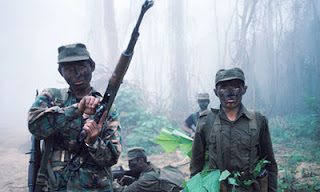
KIA fighters in Burma
Much has been made of late of the ‘concessions’ by the Burmese regime to dialogue and possible political liberalization that began with the release from house arrest of opposition figure, and Nobel Peace Prize winner, Aung San Suu Kyi. Indeed while such moves should be applauded and welcomed one cannot help but wonder if they are little more than a cynical public relations exercise by the country’s military leadership to curry international support for an easing of sanctions against the regime.
The strongest evidence that the new ‘civilian’ (sic) government of President Thein Sein is little more than an iron fist in a velvet glove comes from the continuing offensives by the Burmese military against ethnic minorities such as the Kachin and Karen. Indeed Derek Mitchell the new US special envoy for Burma confirmed on October 17th that there were credible reports of human rights abuses by the military against women and children including murder and rape. More recently allegations have been made that the Burmese Army, the Tatmadaw, has used mortar rounds that have contained poisonous gas in attacks on fighters of the Kachin Independence Army in three war zones: Ga Ra Yang village, Shwe Nyaung Pyin village and Waingmaw Township. On October 30th the Kachin News Group stated that soldiers from the KIA reported that black smoke billowing from areas where the mortar shells landed had left victims dizzy, struggling to breathe and vomiting for several hours. While there is no independent verification of the alleged use of chemical weapons if true such attacks would be in violation of the 1925 Geneva Protocol that prohibited the use of chemical and biological weapons.
These attacks are only the latest in an intensification of hostilities against ethnic groups that have occurred in recent months despite calls by President Thein Sein for national reconciliation. Criticism has also come from Burma’s neighbors. On October 29th Indonesia’s foreign Minister Marty Natalegawa urged Burma’s leaders to make concrete steps towards reconciliation while earlier this year in July Aung San Suu Kyi issued an open letter to the President in which she called for an urgent ceasefire and offered to act as a mediator. Besides the KIA the Burmese Army continues to be engaged in offensives against other armed ethnic groups including the Karen National Union and the Shan State Army.
While the Burman (Bamar) constitute about two-thirds of the country’s population Burma nevertheless is one of the most ethnically diverse countries in the world with 135 distinct official ethnic groups recognized by the government itself. Many of the country’s most important ethnic minorities (the Kachin, Karen, Shan etc) are located on the country’s mountainous borders and have been in conflict with the central authorities for over four decades. While full autonomy for the Frontier Areas, including a Kachin State, was agreed in the historic Panglong Agreement signed in February 1947 by Aung San Suu Kyi’s father, Aung San, the agreement was effectively scuttled following his assassination and the creation of irregular militia under the command of Ne Win who would later overthrow the democratic government of Burma in 1962. Following the establishment of his own personalized Burmese Road to Socialism Ne Win launched a brutal policy against ethnic and political rebels known as the ‘Four Cuts’. The policy was designed to cut the four main links of food, funds, intelligence, and recruits between insurgents, their families and local villagers and largely consisted of a policy of forced relocation and ethnic cleansing. Opponents of the regime internally and externally fear that the military is using the latest concessions to political opponents to deflect attention from the renewed offensives. Whether this is the case or not, what the incidents reveal is that gross abuses of human rights continue in Burma on an almost daily basis and that an investigation of the latest claims of the use of chemical weapons is urgently needed.
 AUTHOR: Dr. Jason Abbott
URL: http://profjabbott.blogspot.com
E-MAIL: jason.abbott [at] louisville.edu
 Blog this!
- Bookmark on Delicious
- Recommend on Facebook
- Tip on Hyves
- Share on Linkedin
- Share on technorati
- Tweet about it
-
Print for later
-
Bookmark in Browser
Tags: Aung San > Aung San Suu Kyi > Bamar > Burma > Burman > Burmese regime > ethnic > Geneva Protocol > human rights > Kachin > Karen > KIA > KIA fighters > Marty Natalegawa > murder > Nobel Peace Prize > Panglong Agreement > rape > Shan > Tatmadaw > Thein Sein
Comments
One Response to “Iron Fist in a Velvet Glove: Burma’s ethnic cleansing continues”
Leave a Reply


november 4th, 2011 @ 23:01
At least the intension of the American, Indonesian and Norwegian government representatives, the editors of three major Burmese exile news outlets and NLD is clear. Support the fake Thein Sein government and totally ignore the worsening strife of people around the country.
Things just can and will get worse.