One man hanged in public in Tehran today- His last words before death: “I’m Innocent”
Posted on | september 12, 2012 | No Comments
 One man was hanged in public in Tehran early this morning. According to the state-run Iranian news agency Fars, the man was 27 years old and identified as Sadegh Moradi, also known by the media as Black Scorpion. He was convicted of raping four women and kidnapping and stealing from 14 other women, said the report.
Sadegh Moradi had previously been exonerated from the rape charges and sentenced to 10 years in prison. But, the decision was met with protests and the case was sent to the Supreme Court where the death sentence was reinstated.
Prior to the execution, Sadegh Moradi’s brother told reporters that the family had been unable to meet with Sadegh in more than a month , and despite waiting outside Evin Prison until 2:00am last night, they were not permitted to meet with him for the last time.
Read more
Tags: Black Scorpion > court > hanged > innocent > Iran > kidnapping > Moradi > prison > rape > raping > sentenced
End complicity in Israeli occupation, South Korean activists tell their government
Posted on | september 11, 2012 | No Comments

Hyundai equipment used in demolition of three homes in Beit Hanina, East Jerusalem, 24 November. Screenshot from video by Haitham Katib.
On 24 November 2011, Israeli occupation forces destroyed three homes in the eastern occupied Jerusalem neighborhood of Beit Hanina, leaving twenty people, including six children, homeless. A video on the action by Haitham Khatib — a still from which is above — shows that Hyundai equipment was in the demolition as Israeli soldiers stood guard.The use of Hyundai equipment in the demolition of Palestinian property is mentioned as an example in a new report on the Republic of Korea (South Korea’s) in Israel’s occupation, colonialism and apartheid. The publication detailing South Korea’s military, economic, academic and cultural ties with Israel was released last week by the Seoul-based Palestine Peace Solidarity @ Seoul(PPS).PPS calls on the South Korean government to enforce an immediate ban on all products or services related to the settlements, apartheid wall or occupation; to cease government trade, research or investment promotion activities with Israel; and to immediately freeze pending agreements, especially those related to trade, investment or military matters. In addition, PPS calls on the South Korean business and academic community to halt immediately any dealings with companies and institutions related to the settlements, apartheid wall or occupation.
Read more
Tags: demolition > forces > Haitham Katib > Israel > Jerusalem > Occupation > Palestine > PPS
Study Shows that Climate Change is Killing Forests
Posted on | september 11, 2012 | No Comments
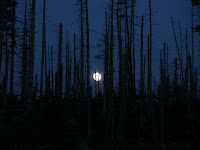 Climate change is causing a massive forest die-off on almost every continent on Earth. Forests are already under threat from illegal logging and land clearing for agriculture. According to a new paper published in the journal Nature Climate Change, trees in forests all around the world are dying due to dry climatic conditions and elevated heat. This study corroborates the notion that global warming is increasing the risk of fires, disease and pest infestations like pine beetles. This die-off is undermining the wide range of ecological and economic benefits that forests provide.
The study, authored by William Anderegg of Carnegie Institution for Science at Stanford University and Jeffrey Kane and Leander Anderegg of Northern Arizona University, reviews dozens of scientific papers dealing with the ecological impacts of climate change on forests.
Although forests reflect more light and decrease local temperatures, there are a host of other issues that are exacerbated by global warming. Forests reduce the impacts of climate change by sequestering carbon and releasing oxygen, however, less trees means more carbon and less oxygen. This constitutes a dangerous feedback loop. Declining forests are being impacted by global warming and this is interfering with the natural processes that mitigate climate change.
Read more
Tags: agriculture > Amazon > Anderegg > atmosphere > Borneo > carbon > climate change > climatic > decomposition > drought > ecological > ecosystems > forest > greenhouse > illegal > Jeffrey Kane > logging > Marin > Mongabay > Rainforest > Redwood > Science Daily > warming
Public Security–the Greatest Casualty of the Drug war
Posted on | september 11, 2012 | No Comments
 In stops all around the country, the Caravan for Peace has found that convincing people that the war on drugs is destructive and wasteful is not the problem. The polls show the public came to this conclusion long ago and now close to a majority favor what used to be considered “radical” solutions like legalizing and regulating marijuana. Although most people weren’t aware of the impact of the violence in Mexico, it’s immediately obvious to them that the drug war—trying to block supply in places like Mexico and stop consumption by criminalizing drugs in the U.S.– is not working. Anywhere.
The question then is: If a public consensus on the failure of the drug war, why hasn’t anything changed?
Why does the U.S. government continue to send millions of tax dollars to cities to fight the drug war, as they close down schools for lack of funds? Why does it waste more millions financing a bloody war in Mexico? Why does the Mexican government continue to pay the economic and political cost of a disastrous and destabilizing war? The U.S. has spent 2 billion dollars on the Mexican drug war in the past five years, mostly through the Merida Initiative and the Mexican government has spent at least four times that much.
Read more
Tags: Caravan for Peace > cartels > CIA > drug war > marijuana > Mexico > terrorist > trafficking
BIF News Briefing, August 2012
Posted on | september 11, 2012 | No Comments
 CONTENTS
1. TIPNIS consultation extended after community resistance
2. Freedom of expression concerns as government takes legal action against newspapers
3. Protests over illegal coca plantations and ‘ecological’ military deployment
4. Tensions mount over Colquiri mine
5. MAS plans to eradicate extreme poverty by 2025 Bicentenary
6. Sacha Llorenti named as ambassador to the UN amid questioning
7. National census to take place
1. TIPNIS consultation extended after community resistance
The MAS government has extended the consultation in the TIPNIS for an extra two months after delays in reaching isolated communities in the region. The new deadline will be 7 November, after the government rejected calls by some MAS deputies to keep the process open-ended.
Read more
Tags: ANF > ANP > Cáceres > CEDLA > Chaparina > CIDOB > cocaleros > cooperativistas > Córdova > ethnic > Llorenti > march > MAS > Méndez > poverty > Protests > religion > sexual > TIPNIS > TSE > UN


One man hanged in public today- Another man to be hanged in public Tomorrow

Mothers Bond to Heal as Baltimore’s Drug War Meets Mexico’s

Gujarat Victims Great Fight Back

11 Prisoners Hanged Today According to Unofficial Sources- One Afghan Citizen Among Those Executed

An Open letter Prime Minister of India

Bangladesh: Assassination of Begum Khaleda Zia has planned

The Latin American LEFT and the GRASS ROOTS

Breaking the Silence in New York; Historic Harlem March to End the Drug War

Abusing children “part and parcel” of Israeli ideology, says rights defender

South Africa Invokes Apartheid Law against the Striking Marikana Miners
Group of Eritreans trapped between borders, Israel adopts new, harsher policy towards refugees

INDIA/PAKISTAN: Remove the abnormal visa restrictions to ensure right to travel and trade

Cultural hegemony and social change

Pirates hijack ship with 23 Indian sailors near Nigeria
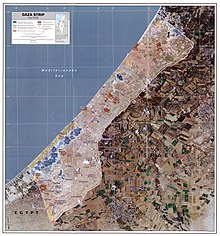
Weapons smuggling from Sinai into Gaza unopposed by Egypt

Why Was Jerry Rawlings Different?

TB-HIV co-infection management training programme launched in Kenya